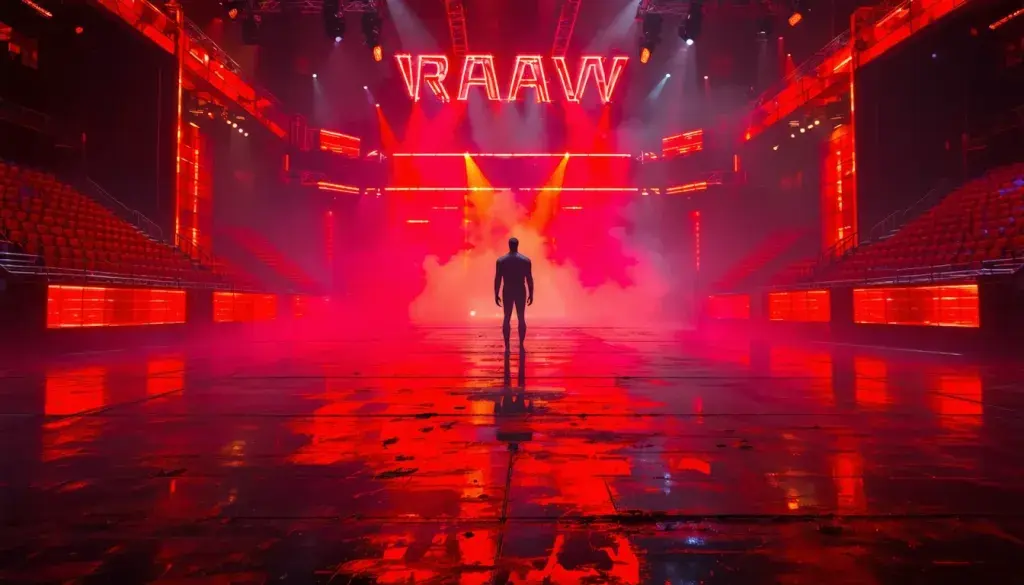
Monday Night Raw's May 11, 2026 broadcast arrives loaded with storyline momentum, offering four distinct narrative threads that span loyalty rituals, title defenses, multi-person confrontations, and a women's tag division response that could shift the landscape heading into the summer. Reviewed by Fightful's Sean Ross Sapp, the episode represents a concentrated effort by WWE's creative infrastructure to advance multiple feuds simultaneously rather than centering the night on a single dominant story.
The Acknowledgment Ceremony and What It Signals for Jacob Fatu
Roman Reigns' Acknowledgment Ceremony has served for years as one of Raw's most reliable theatrical devices - a formalized public declaration of allegiance that carries real narrative weight within the Bloodline's internal hierarchy. Jacob Fatu's participation in the ceremony is the evening's most consequential story beat. Fatu, who has carved out an identity as one of the most physically dominant performers on the roster, stepping into this ritual suggests a deliberate repositioning. Whether the ceremony ends in genuine alignment or theatrical betrayal, it reactivates the Bloodline as a living storyline rather than a relic of a previous era.
The ceremony format also functions as a pressure valve for audience expectations. By placing it on Raw rather than a premium live event, WWE signals that this development is transitional - a setup rather than a resolution. The framing matters. Fatu's trajectory over the preceding months has been built on explosive, independent momentum, making a formal submission to Reigns' hierarchy inherently unstable as a long-term arrangement.
Oba Femi's Open Challenge and the Logic of Sustained Dominance
The Oba Femi Open Challenge continuing into another week is a deliberate booking philosophy, not a scheduling placeholder. Sustained open challenges serve a specific function in professional wrestling's character-building grammar: they establish a performer as unassailable while simultaneously creating a weekly anticipation structure. Femi has been built as a physical force with few credible opponents, and the open challenge format allows the promotion to test audience reactions to potential challengers without committing to a full feud prematurely. The question is not whether Femi wins - that outcome is largely assumed - but who answers the challenge and how close they come to disrupting the dominant narrative the booking team has constructed around him.
Six-Person Confrontation Puts Two Factions on a Collision Course
The Street Profits - Montez Ford and Angelo Dawkins - alongside Joe Hendry facing The Vision's trio of Bron Breakker, Logan Paul, and Austin Theory represents a careful balance of star power and structural contrast. The Vision operates as a faction built around ego, spectacle, and institutional arrogance - qualities that Paul and Theory have each embodied separately for years. Breakker adds physical credibility to a unit that might otherwise rely too heavily on personality. On the opposing side, Hendry's inclusion alongside the Profits reflects a cross-brand energy that the current WWE structure accommodates with increasing frequency. Six-person formats give all six performers visibility without requiring any single figure to carry a full narrative arc, making them efficient vehicles for faction-level storytelling. The result of this encounter will almost certainly function as escalation rather than conclusion.
The Judgment Day Confrontation and the Women's Tag Division's Current Stakes
Brie Bella and Paige holding the Women's Tag Titles while fielding a public response to The Judgment Day creates one of the more culturally layered moments on the broadcast. Both Bella and Paige carry histories within WWE that predate the current era significantly - their presence as champions is itself a statement about the promotion's willingness to reintegrate figures from earlier periods into active, high-profile roles. The Judgment Day, as a faction, has repeatedly demonstrated its ability to generate sustained audience investment through deliberate provocation. A formal response from the champions keeps the feud visible without requiring an immediate in-ring resolution, extending the storyline's shelf life toward a future premium event. How the two champions frame their answer - defiant, composed, or aggressive - will define the tonal register of this rivalry going forward.