
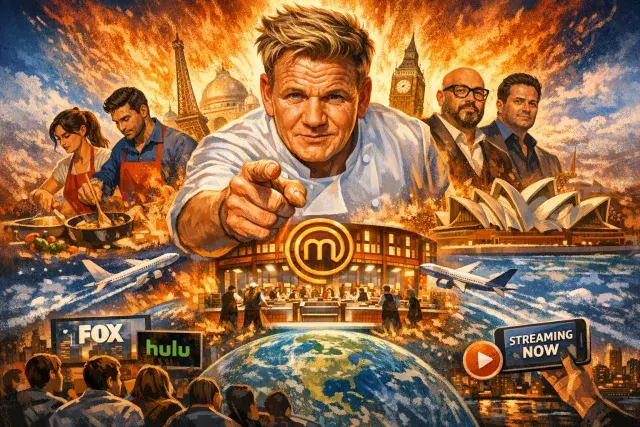

MasterChef will begin its 16th U.S. season, subtitled Global Gauntlet, on Fox on April 15 at 8:00 p.m. ET, keeping one of television’s most durable food formats in primetime. The new season matters not simply because of Ramsay’s star power, but because the series remains a rare example of culinary entertainment that has held cultural relevance across multiple markets for years.
A format built to last
MasterChef has outlived many unscripted food series because it sits at the intersection of aspiration and accessibility. Ramsay’s fine-dining credentials give the program authority, while the home-cook premise keeps it legible to a broad audience. That balance has helped the franchise travel well from the UK original to the U.S. version and other international adaptations, turning cooking into a form of mainstream appointment viewing rather than niche lifestyle programming.
The appeal also reflects a larger shift in food media. Earlier eras of television cooking often centered on instruction and hospitality; newer formats favor pressure, judgment, and personal reinvention. Ramsay has been central to that change. His screen persona is exacting, but it is anchored in the idea that technique, discipline, and taste can be learned. For viewers, that creates a compelling mix of spectacle and self-improvement.
Where and how viewers can watch
In the United States, the new season will air on Fox, with next-day streaming available on Hulu. Viewers who receive Fox through live TV bundles such as YouTube TV, DirecTV, or Hulu + Live TV can watch the premiere live, while on-demand viewers can catch new episodes after broadcast.
International availability is more fragmented. In Canada, CTV will carry Season 16 starting April 15 at 8:00 p.m. ET. In the UK, MasterChef streams on U, though no debut date for the new season has been announced. Australian viewers are still awaiting confirmation, with 10Play presented as the likely destination when a release date is set.
The global streaming reality behind a global franchise
The rollout also highlights a familiar issue in contemporary television: a globally recognized title does not guarantee synchronized global access. Rights are sold market by market, leaving viewers in different countries with different timelines and platforms. That patchwork model can be frustrating for audiences, especially for franchises sustained by weekly conversation and social media momentum.
For travelers, VPN services are often promoted as a way to reach subscriptions from a home country. The practical appeal is clear, particularly for viewers already paying for access. Even so, availability can still depend on a platform’s own policies and regional licensing terms, which remain central to how television distribution works despite the industry’s rhetoric about borderless streaming.
Why Ramsay still commands attention
Ramsay’s staying power comes from range as much as recognition. He moves easily between elite restaurant culture and broad-audience television, presenting culinary skill as both serious craft and popular entertainment. Few personalities in food media have managed to occupy both spaces at once for so long.
That is why a new season of MasterChef still registers as more than routine programming. It marks the continuation of a format that has helped define how television packages food, ambition, and personality for mass audiences. Season 16 may introduce a new subtitle and a fresh set of contestants, but the larger formula remains intact: exacting judgment, high expectations, and Gordon Ramsay at the center of the kitchen.
